

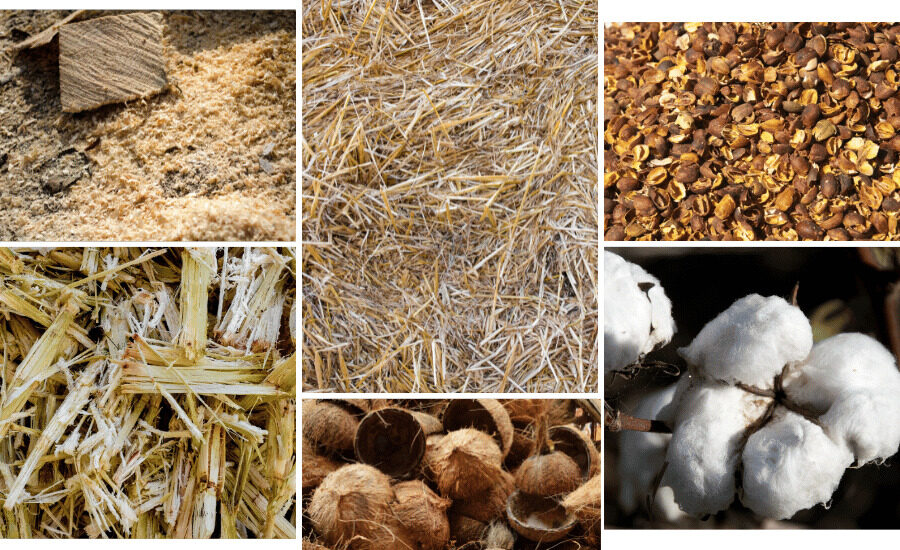
Raw Materials for Biomass Briquette
Biomass briquettes are made from a variety of raw materials that are generally byproducts from agricultural or forestry operations. Here are some common raw materials used to produce biomass briquettes:
- Sawdust: A byproduct from woodworking operations such as sawmills and furniture manufacturing.
- Agricultural residues: Includes straw, husks, shells, and stalks from crops like rice, corn, and wheat.
- Paper waste: Recycled paper that can be processed and used as a component in briquettes.
- Leaves and yard debris: Dry leaves, grass clippings, and other green waste can be compressed into briquettes.
- Wood chips and shavings: Small pieces of wood and shavings that are too small for other uses.
- Peat: Decomposed organic material often used in gardening, which can also be compacted into briquettes.
- Coffee husks: A byproduct of coffee production, these can be converted into a fuel source.
- Coconut shells: Hard shells of coconuts are a substantial biomass resource in tropical regions.
- Cotton stalks: Leftover stalks from cotton harvesting can be used in briquette production.
- Bagasse: The fibrous residue left after extracting juice from sugarcane, commonly used for making briquettes, especially in sugar-producing countries.
These materials are typically dried and then compressed without the use of binders, using the natural lignin within the biomass to act as a binder during the pressing process, resulting in solid, dense briquettes.
Raw Materials and Calorific Value For Briquette
| Material | Calorific Value – Kcal/Kg |
| Groundnut Shell | 4500 |
| Bagasse | 4700 |
| Castor Seed Shells | 3860 |
| Saw Dust | 4400 |
| Cotton Stalks / Chips | 4200 |
| Bamboo Dust | 3700 |
| Coffee Husk | 4200 |
| Tobacco Waste | 1100 |
| Paddy Straw | 3469 |
| Wheat Straw | 4000 |
| Sugarcane Waste | 3900 |
| Forestry Waste | 4170 |
| Rice Husks | 3200 |
| Wood Chips | 4300 |