

Benefits of Biomass
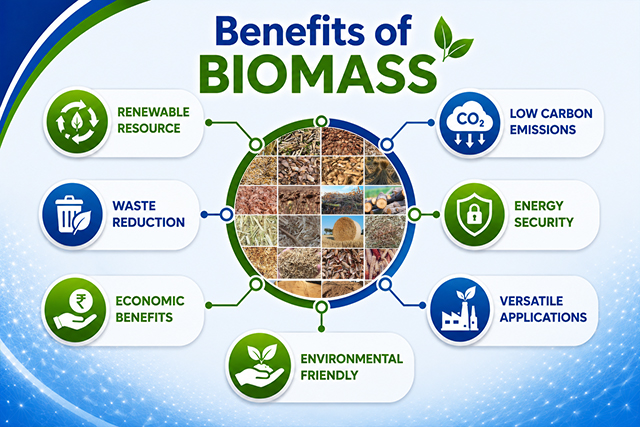
Biomass is a renewable and eco-friendly energy source produced from agricultural, forestry, and organic waste materials. It helps reduce dependence on fossil fuels while converting waste into valuable energy. Biomass fuels, such as briquettes and pellets, offer high calorific value, lower carbon emissions, and cost-effective energy solutions for industries and households.
By utilizing biomass, industries can minimize waste disposal problems, reduce environmental pollution, and support sustainable development. Biomass energy also creates employment opportunities in rural areas and promotes a circular economy by turning waste into clean, green energy.
By utilizing biomass, industries can minimize waste disposal problems, reduce environmental pollution, and support sustainable development. Biomass energy also creates employment opportunities in rural areas and promotes a circular economy by turning waste into clean, green energy.
What is a Briquette?
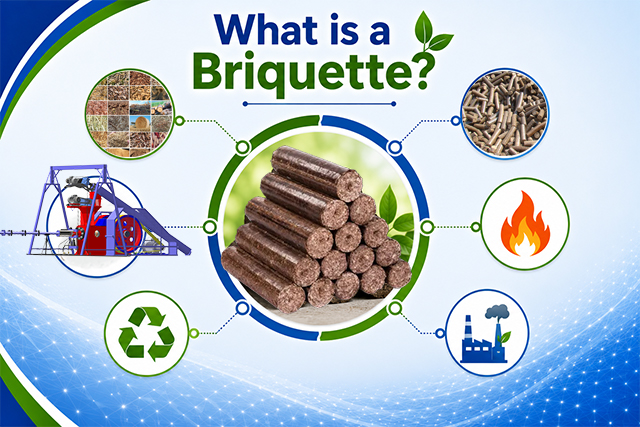
A briquette is a compressed block of biomass made from agricultural and industrial waste such as sawdust, rice husk, and crop residues. It is an eco-friendly, renewable fuel with high calorific value, low ash content, and low carbon emissions, making it an ideal alternative to coal and firewood.
What is biomass and How is it used?
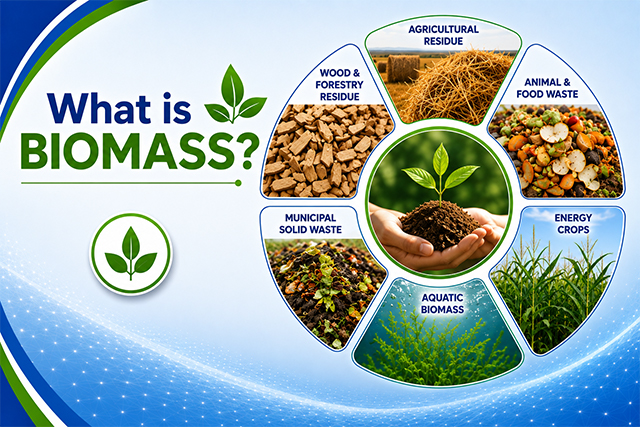
Biomass is organic material from plants and agricultural waste used as a renewable energy source. It is widely used for cooking, heating homes and buildings, and generating electricity because it is a clean and sustainable fuel.
Why is biomass important?
Biomass is an important renewable energy source that can generate electricity using existing power plants. It serves as a sustainable alternative to fossil fuels and is one of the world’s major energy sources after coal, oil, and natural gas.
How will Biomass help reduce pollution?
Biomass helps reduce pollution by lowering greenhouse gas emissions, reducing dependence on fossil fuels, minimizing landfill waste, preventing soil and water pollution, and supporting better forest management and ecosystem health. It is a clean and renewable energy source that contributes to a healthier environment.
What is biomass briquette fuel?
Biomass briquette fuel is a renewable, eco-friendly fuel made by compressing agricultural and forestry waste such as sawdust, rice husk, bagasse, and crop residues into solid briquettes. It is widely used as an alternative to coal and firewood due to its high calorific value, low ash content, and lower carbon emissions.
Benefits of briquettesBriquettes
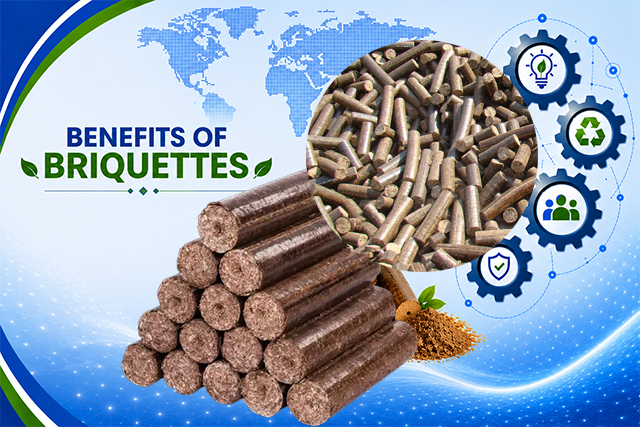
Briquettes are a type of biofuel made from agricultural waste, forestry residues, biomass waste, and municipal solid waste. Replacing non-renewable fuels such as coal and petroleum products with briquettes helps reduce carbon emissions and promotes a cleaner environment.
Also known as Bio Coal, White Coal, or Bio Fuel, briquettes offer high burning efficiency, high calorific value, and nearly pollution-free combustion. They are produced by compressing combustible biomass materials into a dense and compact fuel.
Compared to loose biomass with a bulk density of 60–180 kg/m³, briquettes have a high specific density of around 1200 kg/m³ and a bulk density of about 800 kg/m³, making them a highly concentrated source of energy.
Also known as Bio Coal, White Coal, or Bio Fuel, briquettes offer high burning efficiency, high calorific value, and nearly pollution-free combustion. They are produced by compressing combustible biomass materials into a dense and compact fuel.
Compared to loose biomass with a bulk density of 60–180 kg/m³, briquettes have a high specific density of around 1200 kg/m³ and a bulk density of about 800 kg/m³, making them a highly concentrated source of energy.
Benefits
Concentrated
Briquette have high specific density (1200kg/m3) and bulk density (800kg/m3) compared to 60 to 180 kg/m3 of loose bio mass. Thus, they offer a more concentrated form of energy than firewood or charcoal.
Slow-burning
The compression process allows the briquettes to burn for a lot longer than if it was loose in its original condition.
More efficient
Along with the compactness of the briquettes is the increase in heating value. Briquettes can relatively produce more intense heat than other fuel. They have a higher practical thermal value and much lower ash content (2-10% compare to 20-40% in coal). In fact, they are 40% more efficient, as well as hotter and longer lasting than firewood. This greater efficiency can be attributed to their low moisture and density.
Smokeless
This is a unique property of briquettes. Using them creates no smoke, soot, or carbon deposits. Depending on the base material, they produce no or little fly ash. Further, briquettes do not emit gases or any toxic chemicals like sulfur.
Availability
Biomass is the main component in producing briquettes. So where do we get this biomass? Look around you, and there are loads of biomass materials here, there, and everywhere.
Easy to make
There are presently commercial briquettes sold in the market. However, ordinary households can produce briquettes. You must only have a stock of combustible matter, a binder, and a molder to shape the briquettes.
Easily stored
The size and shape of briquettes make them easily be stored. We can readily pile them in several heaps because of their fun shapes like cubical, spherical, cylindrical, or rectangular blocks. They are likewise clean to handle and be packed into bags.
Easily transported.
Compacting biomass waste into briquettes reduces the volume by 10 times, making it much easier to store and transport than loose biomass waste. Considering their shape, size, and density, briquettes are excellent for long distance transport. Likewise, loading and unloading cost are much less and are done easier.
Cheaper
Since briquettes can be domestically made from plants and animal wastes, they are consequently less expensive to produce, and thereby sold at lower prices.
Renewable
Briquettes make use of organic materials which are common and renewable. Hence, we are ensured of the sustainability of such fuel source.